

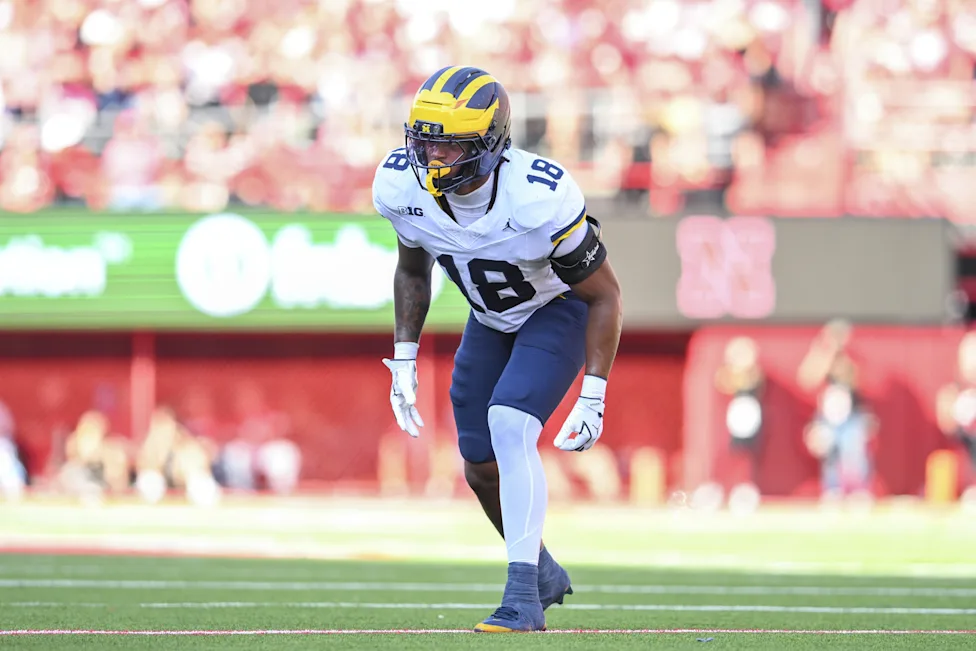
Michigan’s defensive standard does not change because the coordinator does. The Wolverines enter 2026 expecting the defense to be a reason they can beat elite teams, not merely a unit that keeps them competitive. The more interesting question is how Jay Hill gets there. Michigan is moving into a new defensive structure after the 2025 season, but Hill arrives with recent evidence that his defenses can keep points off the board, win high-leverage downs and create extra possessions.
Hill spent the previous three seasons coordinating BYU’s defense. His 2025 Cougars allowed 19.1 points per game and finished in the national top 25 in red-zone defense, interceptions, turnovers gained, third-down defense and pass-efficiency defense. BYU intercepted 17 passes, forced 24 total takeaways and allowed opponents to convert only 33 percent of third downs. A year earlier, Hill’s defense led the country with 22 interceptions and finished 13th nationally in total defense at 308.8 yards allowed per game. That is the statistical identity Michigan is buying: do not give quarterbacks easy answers, get off the field, and make offenses pay for mistakes.
That does not mean Michigan should become a copy of BYU. The Wolverines have their own personnel strengths, and Hill has emphasized throughout his career that scheme has to put the available players in position to make plays. Kyle Whittingham described Hill at his hiring as a disciplined, physical defensive coach with the ability to consistently position players for success. For Michigan fans, the practical translation is simple: expect disguise and multiplicity, but judge the defense by whether the quarterback looks uncomfortable and whether drives die before they become touchdowns.
The front has a potential centerpiece in John Henry Daley, who followed the new staff to Ann Arbor after an All-America 2025 season at Utah. Daley enters 2026 on the Bronko Nagurski Trophy and Lott IMPACT Trophy watch lists. His presence gives Michigan a proven edge threat while the rest of the front settles into new roles. A defense built around forcing long-yardage situations only works if somebody can punish the offense once it gets there; Daley gives Hill an established answer on the edge.
At linebacker, Troy Bowles gives the defense another experienced piece with familiarity in high-level football. The larger challenge for the second level is not simply tackle production. Hill’s best BYU defenses made offenses work through changing pictures and then rallied to limit the damage. Linebackers have to fit the run without becoming easy targets for play action and RPOs. That is especially important in a Big Ten schedule where Michigan will see both downhill run games and offenses designed to isolate linebackers in space.
The secondary may determine the ceiling. Jyaire Hill enters the season on the Jim Thorpe Award watch list after earning honorable-mention All-Big Ten recognition in 2025 and being voted Michigan’s Defensive Skill Player of the Year. Rod Moore returns as a captain and veteran voice. Jay Hill’s recent defenses have generated interceptions at an elite rate, but takeaway production is volatile. Michigan cannot build its entire defensive projection around assuming interceptions will simply appear. The sustainable part is forcing quarterbacks to hold the ball, disguising where help is coming from and creating enough contested throws that turnovers become a byproduct rather than a requirement.
Fall camp is therefore less about learning whether Michigan wants to be physical — that answer is obvious — and more about how quickly the defense communicates Hill’s system. Michigan opened its first camp under Whittingham on August 5, with Hill addressing the defense as the new coordinator. New terminology and new coverage rules can look seamless in a meeting room and very different when an offense motions, shifts and snaps quickly. The early-season test will be whether Michigan can play multiple looks without sacrificing the speed and confidence that have defined its best defenses.
There is reason for optimism, but there is also a trap in assuming a coordinator’s previous rankings transfer automatically. BYU’s 2025 defense was excellent in the areas that matter most — points, red zone, third down and takeaways — without being the nation’s most dominant defense on every raw yardage measure. Michigan’s roster is different, its opponents are different and its margin for error against playoff-caliber teams will be smaller. The goal is not to recreate BYU’s stat sheet. It is to import the parts of Hill’s defense that travel: disguise, situational execution, ball production and disciplined leverage.
For Michigan to become a playoff team, the defense probably does not need a dramatic reinvention. It needs to remain one of the most difficult units on the schedule while giving the new offense room to grow. If Hill can combine Michigan’s existing physical talent with the third-down and takeaway profile his BYU teams produced, the Wolverines should again have a defense capable of deciding games. The standard is straightforward: force field goals, steal possessions and make opposing quarterbacks earn every clean look.